
Singapore is one of the few places in the world where eating is genuinely a cultural act. Singapore heritage food is not just about what’s on the plate — it’s about centuries of migration, trade, and cultural exchange compressed into a bowl of laksa or a plate of Hainanese chicken rice. If you’re new to the city, getting to know the food is one of the fastest ways to understand where you’ve landed. And more often than not, it’s the thing expats say they’ll miss most when they eventually leave.
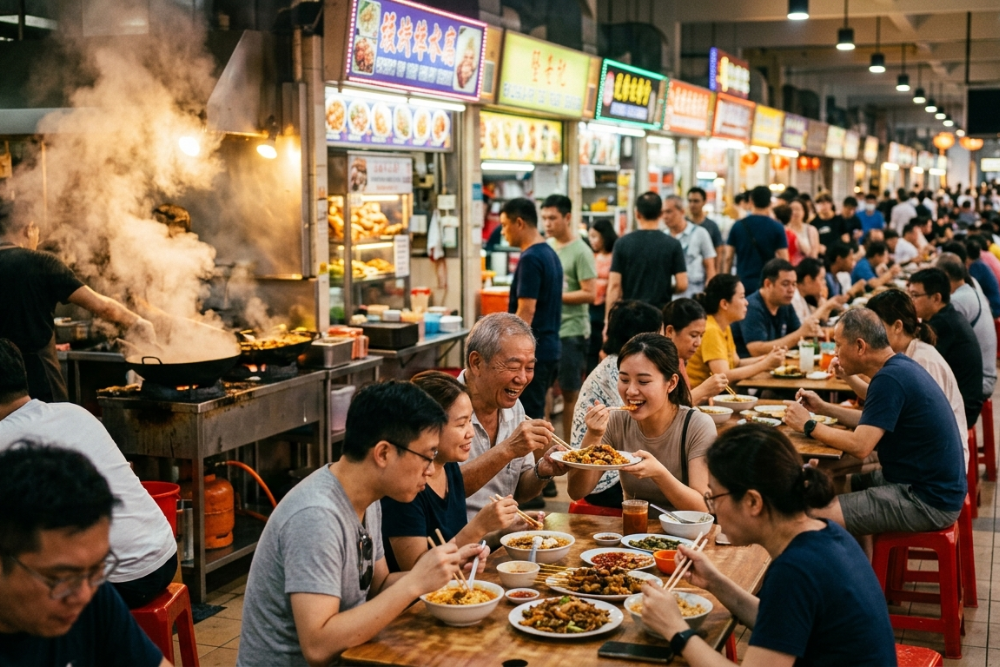
What Defines Singapore Heritage Food — and Why It Matters
At its core, Singapore heritage food reflects the country’s multicultural roots: Chinese, Malay, Indian, Peranakan, and Eurasian communities all contributed dishes, techniques, and ingredients that have woven themselves into everyday life. These aren’t museum pieces. They’re eaten daily, at hawker centres, kopitiams, and family-run stalls that have been open for decades.
Singapore’s National Heritage Board documents many food-related traditions as part of the country’s intangible cultural heritage — recognition that a bowl of bak kut teh or a plate of rojak carries real historical weight.
What sets this food apart is the layering. You’ll find coconut milk, tamarind, lemongrass, fermented shrimp paste, and dried spices appearing across cuisines that are technically distinct but clearly shaped by proximity and shared history.
Iconic Dishes: A Practical Guide to Singapore Heritage Food
These are the iconic Singapore dishes worth knowing before you arrive — and worth finding properly once you do.
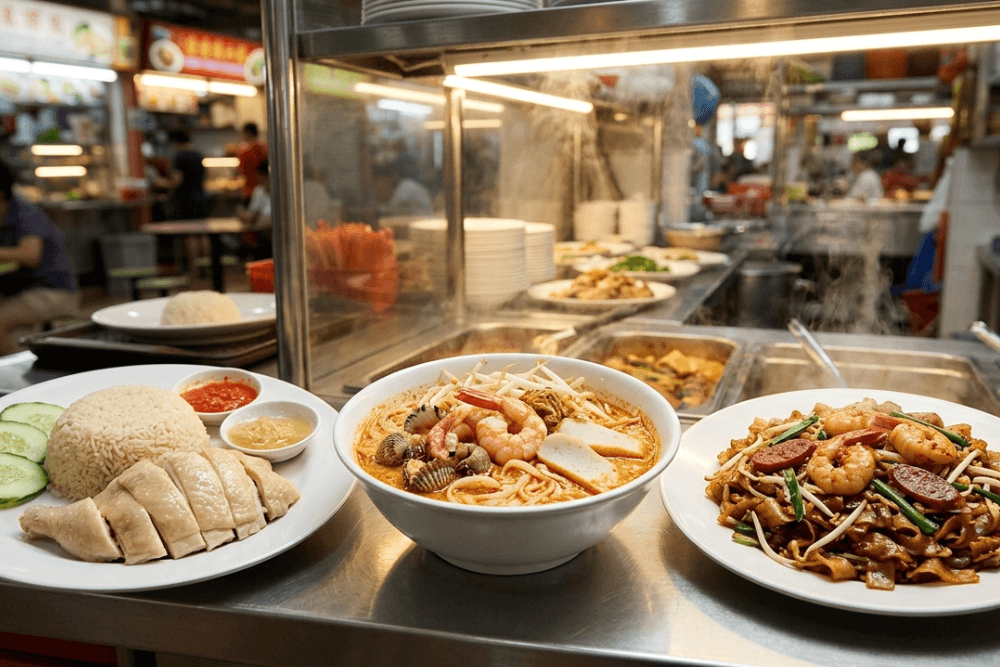
- Hainanese Chicken Rice — Singapore’s unofficial national dish. Poached or roasted chicken served over fragrant rice cooked in chicken broth, with chilli sauce and ginger paste on the side. Simple in appearance, meticulous in execution. It’s one of the most debated famous Singapore food items — ask ten people which stall does it best and you’ll get ten different answers.
- Laksa — A rich, spicy coconut noodle soup with roots in Peranakan cooking. There are regional variants across Southeast Asia, but Singapore’s version has its own character. The Katong laksa from the East Coast is arguably the most recognised and is a good first stop for anyone exploring traditional Singapore food in its natural setting.
- Char Kway Teow — Flat rice noodles stir-fried at high heat with egg, bean sprouts, Chinese sausage, and cockles. The wok hei — that slightly smoky, charred flavour — is what makes or breaks it. It cannot be replicated at home without the right setup, which is why the hawker version always wins.
- Nasi Lemak — A Malay classic of coconut rice served with sambal, fried anchovies, cucumber, and a hard-boiled egg. Often eaten for breakfast, though in Singapore it shows up at all hours.
- Chilli Crab — The dish Singapore is most famous for internationally. Sri Lankan mud crab in a thick, tangy chilli-tomato gravy, eaten with fried mantou buns. Many seafood restaurants across Singapore serve their own version, with Jumbo Seafood and Long Beach Seafood among the city’s best-known names.
- Kueh — The umbrella term for Peranakan and Malay bite-sized snacks and sweets, made from rice flour, coconut milk, and pandan. The colours alone are striking. Kueh lapis, ondeh ondeh, and ang ku kueh are the ones to start with.
Finding It: Hawker Centres, Kopitiams, and Food Streets
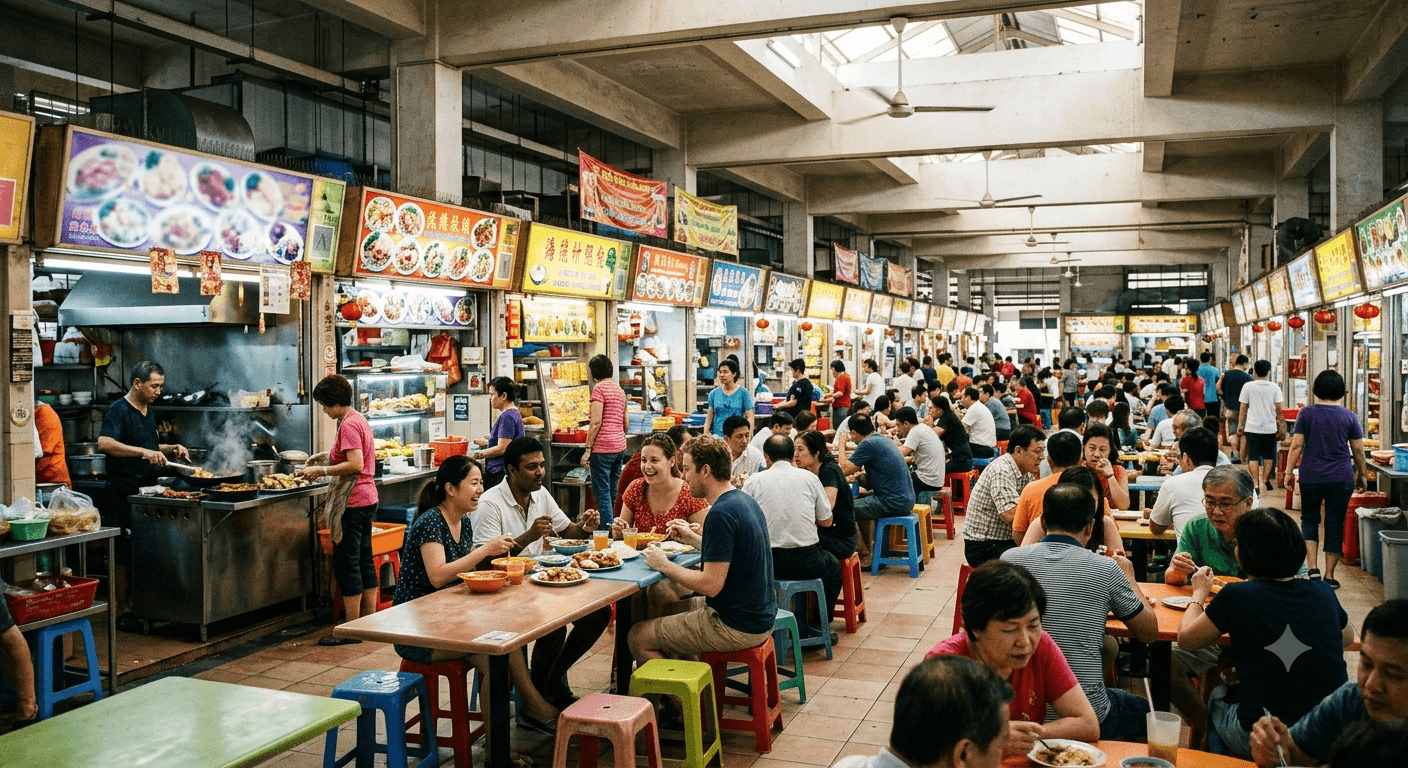
At a hawker centre, there is no single menu — you wander between individual stalls, each one specialising in one or two dishes. That’s the point, and it’s one of the most distinctive things about Singapore hawker food in its natural context.
Newton Food Centre, Lau Pa Sat, and Old Airport Road Food Centre are all worth visiting. Chinatown Complex, Geylang Serai, and the Tekka Centre in Little India each offer distinct flavour profiles shaped by the communities that built them.
For a sit-down experience, Peranakan restaurants around Emerald Hill, Katong and Joo Chiat offer a broader introduction to dishes that may be less commonly found at hawker centres.
Many hawker meals remain relatively affordable compared with restaurant dining, although prices vary depending on the dish, stall and location. Tipping is not expected. Eating alone is completely normal. Sharing tables with strangers is standard during peak hours. These are the unwritten rules.
Frequently Asked Questions
What Singapore heritage food should a first-time visitor try?
If you’re new to Singapore, start with Hainanese chicken rice, laksa, nasi lemak, char kway teow and chilli crab. Together, they offer a useful introduction to some of the Chinese, Malay and Peranakan influences that have helped shape Singapore’s food culture.
What is Singapore heritage food exactly?
It refers to dishes with deep roots in Singapore’s multicultural communities — Chinese, Malay, Indian, and Peranakan — that have been passed down through generations and are considered part of the country’s living culinary culture. Singapore’s National Heritage Board documents many of these traditions as part of the country’s intangible cultural heritage.
Where can I find Singapore heritage food recipes?
Singapore heritage food recipes are increasingly well documented. The National Heritage Board has published archival recipe collections, and cookbooks covering Peranakan and Straits Chinese cooking are widely available. Online, the best results tend to come from bloggers with family roots in the dish they’re writing about — look for specificity over polish.
Is hawker food safe to eat?
Singapore’s food establishments are subject to licensing and food-safety requirements administered by the Singapore Food Agency. As with eating anywhere, diners should use normal judgement and refer to current official guidance where necessary.
Final Thoughts
Food is one of the most generous entry points into any culture, and Singapore makes it unusually accessible. Singapore heritage food is everywhere — in the morning queue at a kopitiam, in the evening crowds at a hawker centre, in the takeaway containers making their way home through HDB corridors. You don’t need a guide to find it. You just need to start eating.
For many expats, the neighbourhood they live in shapes which food traditions they discover first. Central areas like Chinatown, Tiong Bahru, Katong and Geylang each have their own culinary identity. If you’re still figuring out your base, renting a room in Singapore in a convenient, well-connected location can put much of the city’s food culture within easy reach from day one.
Singapore has a way of feeling like home before you’ve even realised it happened. And often, it starts at a hawker centre stall you’ve visited one too many times. The right neighbourhood — and the right home — makes that happen sooner.
If you’re looking for a well-located, fully managed place to settle into, explore what’s available with WExpats Boutique Co-Living and find a home that puts more of Singapore within reach.
0 Comments