
The best co-living property management company in Singapore rarely announces itself with a superlative on the homepage. It proves the claim through how long is its relationship with its landlords and on how it handles the parts of the job nobody puts in a brochure: the 11 p.m. call about a tripped circuit breaker, the tenant who wants to break a lease two months early, the AC unit repairs or the piping issue nobody raised before. For a landlord deciding who should run a private condo unit, a shophouse, or a cluster of rooms as a shared living space, that distinction matters far more than a star rating, a website, or a homepage full of testimonials. This guide for landlords sets out what separates a manager who genuinely understands co-living from an agent who bolted a co-living page onto an existing rental listing service.
What Landlords Should Actually Look For in a Co-Living Manager
Property management pitches tend to sound alike. Nearly every firm claims deep experience, a wide range of services, and a strong reputation. The differences that actually matter only show up once a landlord asks specific questions, and not most of the companies know how to differentiate from its competitors or how to add a differential value to its landlords.
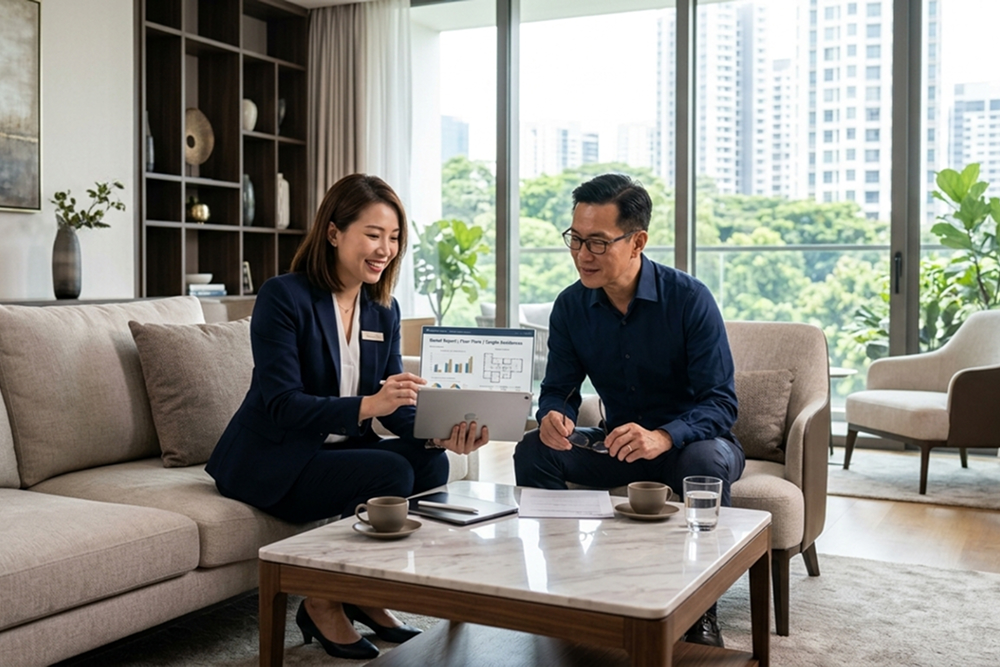
A Track Record With Multi-Tenant, International Households
Running a property with five unrelated tenants under one roof is a different job from managing a single family on a two-year tenancy. Room allocation, shared-space etiquette, staggered move-in and move-out dates, individual requests from the tenants and the occasional language or cultural friction between housemates all need active management, not just a signed contract. Ask a prospective manager how many multi-tenant units they currently run day to day, not how many properties sit on their books in total. The two numbers are often very different.
Services That Cover the Whole Lifecycle, Not Just Rent Collection
A manager who only chases rent and forwards maintenance requests to an external contractor is doing a fraction of the job. Stronger operators handle tenant sourcing and screening, interior fit-out, lease documentation, day-to-day maintenance through an internal handyman, dispute resolution between housemates, and community management, end to end, without the landlord or the agent’s landlord fielding every phone call personally.
Reporting a Landlord Can Actually Read
As a landlord ask to see a sample monthly statement before signing anything. A property manager worth hiring can show occupancy by room, arrears, and maintenance spend in a format that takes two minutes to understand, rather than a PDF that needs a follow-up call to decode.
Why Co-Living Often Outperforms a Standard Single Tenancy
Co-living isn’t automatically the better model for every property for example, a landlord with a small one bedroom unit in a quiet estate probably doesn’t need it. But for larger units in central, well-connected locations, co-living rental yield in Singapore frequently outperforms what the same unit earns as a single-family lease (some of the landlords apply a 5-10% premium rental price on what it would be applied to a single-family).
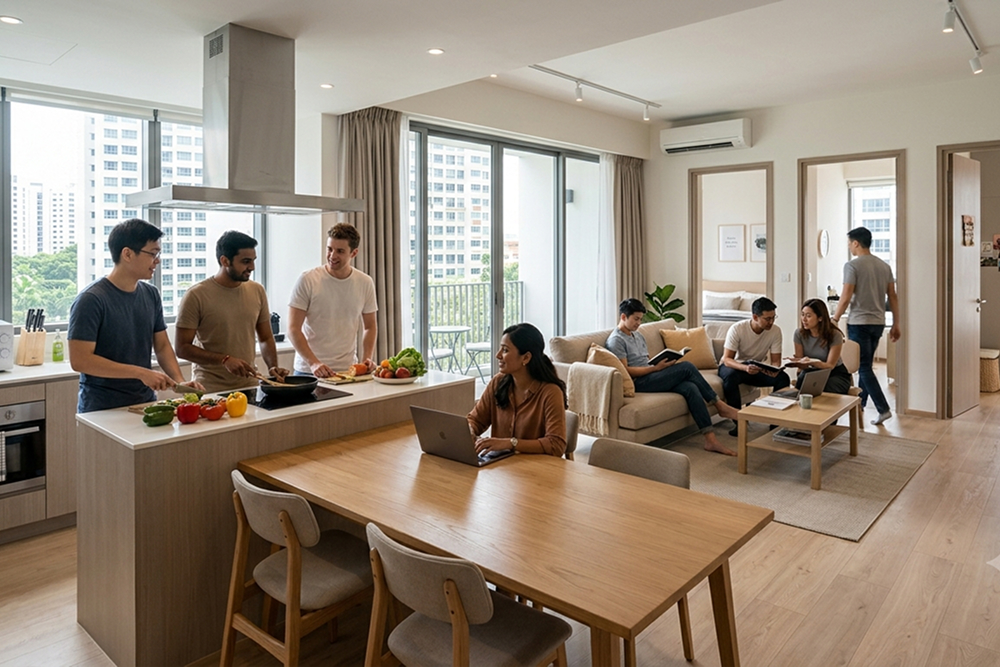
Higher Yield From Room-by-Room Rental
Renting five rooms individually to five working professionals typically brings in more monthly income than renting the same unit whole to one household, once furnishing and renovation works costs are factored in. The gap varies by district (distance to the closest MRT or Bus stations) and unit size, a unit near an MRT interchange in the city fringe behaves differently from one in a quieter suburban estate so any manager worth hiring should walk through the actual numbers for a specific property rather than quoting a generic percentage.
Some landlords prefer to sign what the industry calls a master lease (the more common model among the coliving and service apartments industries) the most common format in Singapore instead of managing the room-by-room arrangement themselves: the manager leases the whole unit directly from the owner at a fixed, guaranteed rent, then takes on the work and the risk of subletting individual rooms. A master lease company in Singapore effectively shifts that risk from the landlord to the manager, in exchange for a guaranteed rent that sits a little below the theoretical room-by-room maximum.
Vacancy Risk Spread Across Several Tenants
A single-tenancy unit sits fully vacant the moment its one tenant leaves. A five-room co living unit loses onefifth of its income when one tenant leaves, while the other four keep paying rent. That difference compounds significantly over a multi-year holding period.
Faster Turnaround Between Tenants
Because co-living tenants tend to be individuals rather than families relocating together, move outs and moveins happen on a rolling basis rather than all at once. A manager with experience, an international community network and an active waitlist of prospective tenants can often fill a vacated room within days rather than the weeks a single-family whole-unit typically takes.
Immigration Compliant Tenants
As most of the tenants leasing co-living properties are foreigners, property managers carry a heavy legal burden when leasing. Overlooking a tenant’s immigration status or ignoring illegal occupancy can expose both property managers and landlords to legal liabilities. Managers must have immigration compliant checks and remain vigilant on their tenants immigration statuses.
Inside a Co-Living Manager’s Playbook: Compliance, Design, and Daily Operations
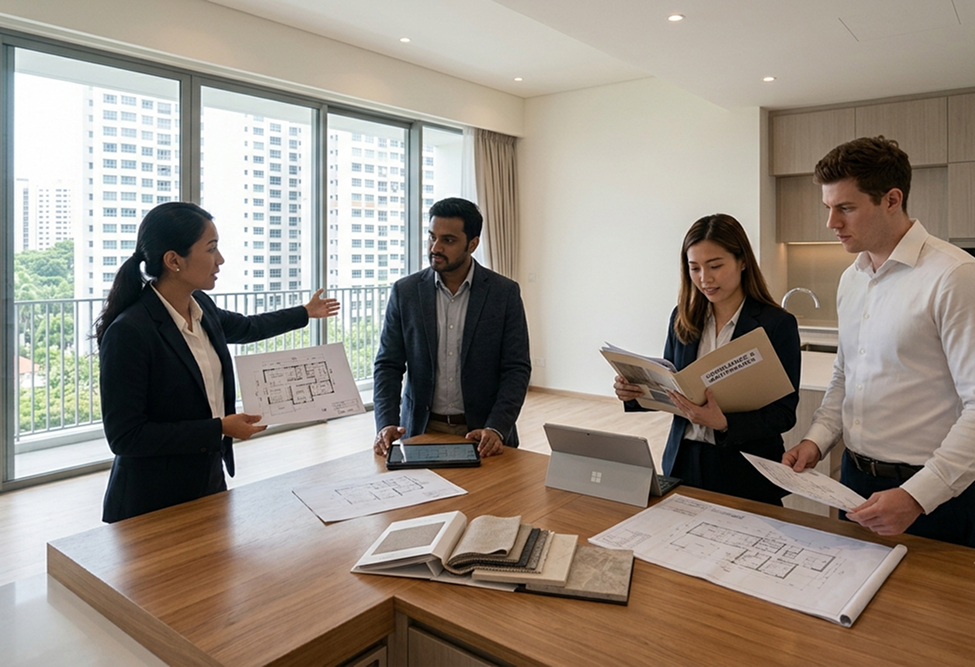
Staying on the Right Side of URA and HDB Rules
Singapore regulates residential rental closely, and the rules differ for private property and HDB flats. The Urban Redevelopment Authority sets a minimum stay of three consecutive months for private residential units. Anything shorter counts as short-term accommodation, which is illegal and can result in a fine. HDB flats carry a separate subletting approval process and their own occupancy limits, and these rules are periodically updated, so a manager who can explain the current rules clearly is one that takes compliance seriously.
Fire safety is worth raising separately, because it’s the part landlords are most likely to overlook. Adding partition walls or converting a living room into an extra bedroom can trigger additional requirements around means of escape and fire-rated doors. A manager who knows how to identify these details before renovation begins, rather than after the Singapore Civil Defence Force raises it during an inspection, saves a costly rework down the line.
Furnishing and Layout Decisions That Actually Affect Occupancy
The difference between a room that rents out in three days and one that sits empty for three weeks often comes down to details a landlord wouldn’t think to ask about: whether the mattress is a genuine queen or a slightlytoo small substitute, whether the wardrobe has enough hanging space for someone living out of one room longterm, whether the shared kitchen has enough counter space for the flatmates to cook at once without getting in each other’s way. A manager who has furnished dozens of these rooms tends to have strong opinions on all three, shaped by which layouts have actually rented fastest.
A Landlord We Work With Near Tiong Bahru
One landlord we manage a unit for. We’ll call him Mr. Lim, since he’d rather keep a low profile — bought a four-bedroom condo unit near Tiong Bahru intending to rent it out to a single family. After eight months on the open market with barely any viewings, he switched to a room-by-room co-living model instead. We refurnished the unit, split it into four ensuite-style rooms, and filled all four within five weeks by drawing from our existing waitlist of young professionals relocating to Singapore. Eighteen months on, his combined room income sits noticeably above what the same unit fetched as a single-family lease, and he has faced exactly one vacancy gap longer than a week, when two tenants happened to move out in the same fortnight. The arrangement isn’t friction-free for the manager — it still sends the occasional evening text asking why a maintenance job hasn’t been closed out yet — income and occupancy numbers are not relevant data for the landlord anymore, as the risk us fully transferred to the property manager.
Property Management for Landlords in Singapore: Questions to Ask Before You Sign
Once a landlord has shortlisted a property manager, three questions tend to differentiate a solid arrangement from a regrettable one.

Fee Structure and What’s Actually Included
Management fees for co-living arrangements in Singapore commonly sit anywhere between roughly 10% and 15% of gross rental income, depending on how much is bundled in. Ask explicitly whether furnishing, renovation works and maintenance call-outs sit inside that fee or get billed separately. A lower headline percentage sometimes hides a longer list of add-on charges. Furnishing and renovation costs also vary a great deal depending on whether a manager buys new furniture, reuses existing pieces, or works from an in-house inventory built up across other units, so ask which approach applies before assuming the quoted budget covers everything.
Contract Length
A master lease or management agreement should spell out the notice period required to exit, what happens to the furniture the manager installed or the renovation works made if the arrangement ends, and who absorbs those costs if the landlord decides take over the property. Read this section of the contract before anything else.
How Often a Landlord Will Actually Hear From Them
Ask directly: will you receive a monthly statement, a quarterly call, or nothing until something goes wrong? A manager who commits to a specific reporting cadence up front is telling a landlord something useful about how they’ll be managing the property.
Frequently Asked Questions
How much does a co-living property management company in Singapore typically charge?
Fees generally range from around 10% to 15% of gross rental income, depending on how many services are bundled into the management fee and whether the landlord is also paying separately for furnishing or renovation works.
Is co-living legal for private condos and HDB flats in Singapore?
Room rental is generally permitted for private condos, subject to URA’s minimum three month stay rule and an overall occupancy cap. HDB flats require separate approval to sublet rooms and follow their own occupancy quotas, so any manager handling an HDB flat should walk a landlord through the specific approval process before listing a room.
What happens if a tenant damages the unit or stops paying rent?
A competent manager should have a documented tenant screening process, a security deposit structure, and a clear plan for handling arrears before a first payment is even missed. Ask to see that process in writing rather than accepting a verbal assurance that it’s handled.
How is co-living different from renting through a regular real estate agent?
A standard agent typically finds a tenant and hands over the keys, leaving the landlord to manage everything afterward. A co-living manager continues running the property day to day tenant relations, maintenance, rent collection, and re-letting for as long as the management agreement runs.
Ready to See What Your Property Could Earn as a Co-Living Space?

If you own a property in Singapore and want a straight answer on whether it makes sense as a co-living space, rather than a sales pitch dressed up as one, get in touch with our team. We’ll walk through the unit, the numbers, and a realistic occupancy and income picture for that specific property, no obligation, and no generic percentage promises. Reach us at +65 8555 1666 or info@wexpats.sg, or fill out the partnership form on our site to get started.
0 Comments